
Discover Barcelona with Hostemplo
A city full of art, culture and Mediterranean life awaits you.
Barcelona, located on the northeast coast of the Mediterranean, is one of Spain’s most important and vibrant cities. The city combines history, modernity and a unique cosmopolitan character that is reflected in its architecture, cuisine and lifestyle.
Here you will find everything: history, art, mountains and sea. Stroll among Gaudí’s masterpieces, lose yourself in the streets of the Gothic Quarter, enjoy the Mediterranean atmosphere in Barceloneta and be amazed by its intense cultural life.
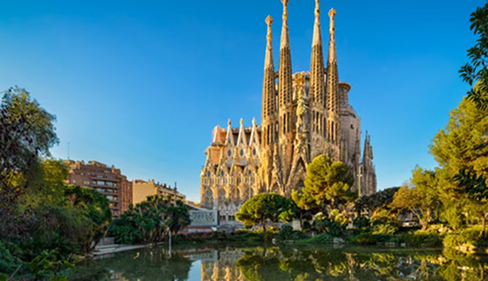
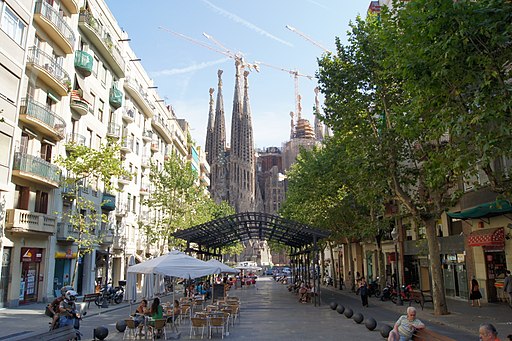
At Hostemplo, you will be just a stone’s throw from the Sagrada Familia and with the best connections for getting around the city. Our team will be delighted to recommend routes, restaurants and unique spots so you can experience Barcelona like a true local.
Barcelona enjoys a mild Mediterranean climate. Winters are temperate and summers are warm and sunny, ideal for enjoying both the beach and the city. Rain is rare, allowing you to explore Barcelona all year round.
The official languages are Catalan and Spanish. Barcelona is a cosmopolitan city, so you will also often hear English, French, Italian or Portuguese, especially in tourist areas and shops.
The official currency is the euro (€). You will find cash machines and bureaux de change throughout the city, and most restaurants, hotels and shops accept card payments.
Get around easily on public transport: the metro, bus and tram are fast and economical. Buy a T-Casual card for 10 journeys. Don’t forget to book your tickets in advance for monuments such as the Sagrada Familia or Parc Güell. And above all, enjoy the city at your own pace!
Discover Barcelona's hidden corners and best curiosities
Take the city with you wherever you go. We have prepared an exclusive Hostemplo guide for your mobile phone so you can discover Barcelona in a different way. In it you will find two unique routes that you cannot miss:
Modernism Route: a stroll through Gaudí’s masterpieces and modernist architecture.
Gothic Route: delve into medieval Barcelona and discover its best-kept secrets.
Download it for free and start living your local experience from day one.
Main tourist attractions in Barcelona
he Sagrada Familia is Barcelona’s most well-known and distinctive monument. It is the supreme example of Gaudí’s modernist architecture and has become the symbol of Barcelona. Its visit is essential. Although still unfinished, the Sagrada Familia is an exuberant temple loaded with religious symbolism. Its construction began in 1882 and, from the beginning, it has been an expiatory temple; i.e., built from donations. Gaudí died in 1926 leaving the project unfinished, but thanks to the preserved plans, his dream appears likely to come true in 2026, also thanks to the work of other artists and the money obtained from donations and visits. To design the interior, Gaudí was inspired by the shapes of nature and created columns shaped like tree trunks that turn the interior of the temple into an enormous stone forest.
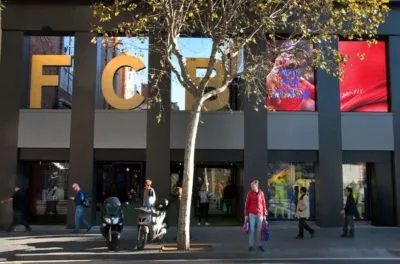
Opposite the Sagrada Familia, football fans can visit the FC Barcelona Store-Museum, where, besides reliving the great moments of the club, you can buy shirts and souvenirs of your idols. The Camp Nou stadium is currently undergoing renovation as part of the Espai Barça project. While the works continue, the Barça museum remains open to the public, with interactive exhibitions, trophies and historical archives, as well as the official store and several dining areas. Once the works are completed — scheduled for late 2026 — the stadium will have a capacity of over 105,000 spectators, becoming one of the most modern and spectacular sports venues in the world.
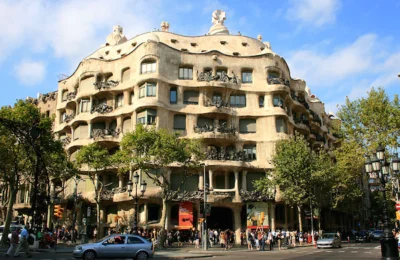
Casa Milà (also known as “La Pedrera”): This is the second most important house designed by Gaudí. The Milà family, advised by the Batlló family (who were delighted with the architect’s work), commissioned the brilliant architect to construct their house. This time Gaudí was inspired by the shape of a quarry (or “pedrera” in Catalan, hence its nickname) shaped by the waves of the sea. Built between 1906 and 1912, the spectacular building is one of the most visited places in Barcelona, declared a UNESCO World Heritage Site in 1984. Despite its size (it occupies a whole chamfered block), its sinuous shapes and the play of light give the sensation of being in motion. As is usual, he was inspired by the forms of nature, a hallmark of Gaudí’s works. The architect often used materials from Catalonia and in this house used limestone for the façade, except in the upper part, which is covered with white tiles, simulating a snow-capped mountain.
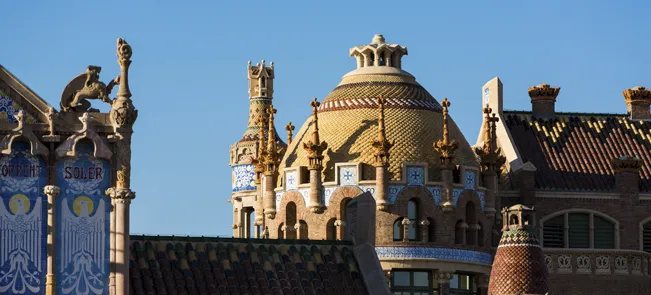
It is like a little diagonal that breaks the perfect grid of the Eixample and goes from the Sagrada Familia towards the Hospital de Sant Pau. It is a semi-pedestrian street that links the magnificent works of Gaudí and Domènech i Montaner. It is a lively street in which the presence of modernist lampposts by Pere Falqués stands out. It has terraces and many shops, especially for lovers of neighbourhood commerce.
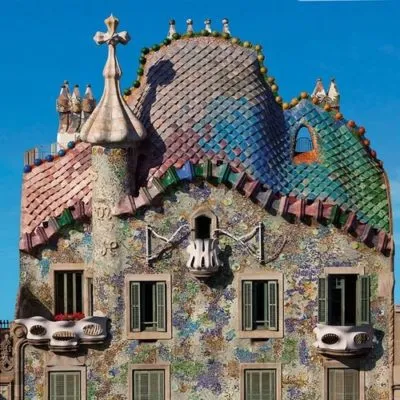
Casa Batlló: The most representative work of Modernism (along with La Pedrera), commissioned by the Batlló family to the brilliant architect Gaudí between 1904 and 1906. In that era the Catalan bourgeoisie competed to have the most beautiful house. It opened to the public in 2002 and three years later was declared a UNESCO World Heritage Site. In addition to being a must-visit, during the summer various activities and musical events are organised on its terraces. The building symbolises the legendary Catalan legend of Sant Jordi: it especially stands out the rooftop, which emulates the back of the dragon. Gaudí was inspired by the waves of the Mediterranean Sea to design the façade, while the interior of the house is full of details that emulate the organic forms of nature, without losing the functionality of a home.
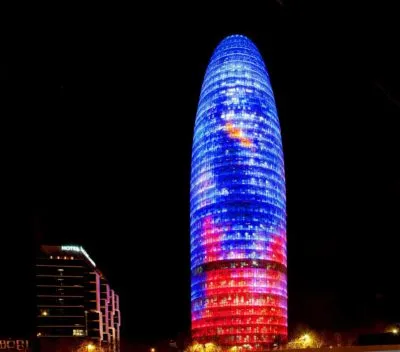
Torre Glòries (formerly Agbar): One of Barcelona’s most famous skyscrapers, being the third tallest building in Barcelona after the Hotel Arts and the Torre Mapfre. It is located next to Plaça de les Glòries and the renewed Encants market, and is one of the symbols of Barcelona’s skyline. The most characteristic feature of this 34-storey, 145-metre tower is its lighting. It has more than 4,500 LED lights that project different shapes and drawings while changing colour. Due to its characteristics, it is easy to see it from several points of Barcelona and it has become one of its tourist icons. Without doubt, the best moment to visit it is at nightfall, when its facade fills with colour. The tower, since 2017 owned by Merlin Properties, belonged to Aguas de Barcelona (Agbar, hence its name), and was designed by the architect Jean Nouvel, who was inspired by the rounded shape of Montserrat mountains and the bell tower of the Sagrada Familia by Antoni Gaudí.
The emblematic park of Catalan modernism. Located in the highest area of Barcelona (Carmel hill), it is a must-visit place. Gaudí, commissioned by the entrepreneur Eusebi Güell, carried out the design of a park with large garden areas, full of paths inviting relaxation and tranquillity. The architect built the park according to his most naturalistic stage of modernism, inspired by organic forms of nature. It has a certain rococo touch with colourful, highly elaborate ceramic sculptures. Among all the works in the park, the “Dragon” stands out, turned into a city icon. It is a park full of charm, declared a UNESCO World Heritage Site among Gaudí’s works. A perfect place to stroll peacefully and admire all the genius of the Catalan architect.
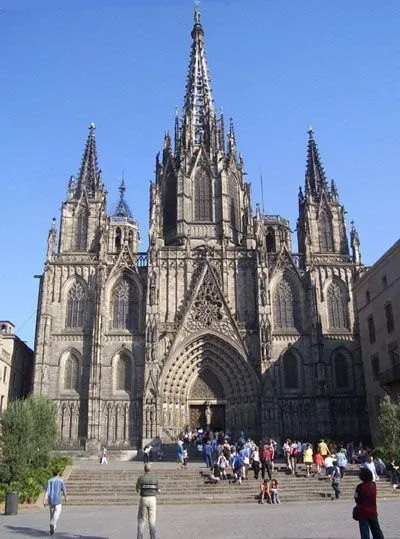
**Catedral de Barcelona: The Barcelona Cathedral is an example of Catalan Gothic architecture. Located in the centre of the city, it was built between the 13th and 15th centuries on top of the old Romanesque cathedral. Originally it was going to be a Romanesque-style church, but it was decided to make it Gothic to attract more tourists at that time. The cathedral is also known as the Cathedral of the Holy Cross and Saint Eulalia, since in its crypt lies the tomb of Eulalia, a young woman who was tortured to death in 340 AD for defending her Christian faith and who today is one of the patron saints of the city of Barcelona. In the cloister live 13 geese that recall Saint Eulalia’s age when she died. The choir of the cathedral is one of the most valuable places inside and features a spectacular carved wooden stalls. There are two other points of interest: the terrace, where you can enjoy views of the city, and the Chapel of the Holy Christ of Lepanto, where a crucified Christ adored by Barcelonans is shown.

The Barcelona Cathedral is an example of Catalan Gothic architecture. Located in the centre of the city, it was built between the 13th and 15th centuries on top of the old Romanesque cathedral. Originally it was going to be a Romanesque-style church, but it was decided to make it Gothic to attract more tourists at that time. The cathedral is also known as the Cathedral of the Holy Cross and Saint Eulalia, since in its crypt lies the tomb of Eulalia, a young woman who was tortured to death in 340 AD for defending her Christian faith and who today is one of the patron saints of the city of Barcelona. In the cloister live 13 geese that recall Saint Eulalia’s age when she died. The choir of the cathedral is one of the most valuable places inside and features a spectacular carved wooden stalls. There are two other points of interest: the terrace, where you can enjoy views of the city, and the Chapel of the Holy Christ of Lepanto, where a crucified Christ adored by Barcelonans is shown.
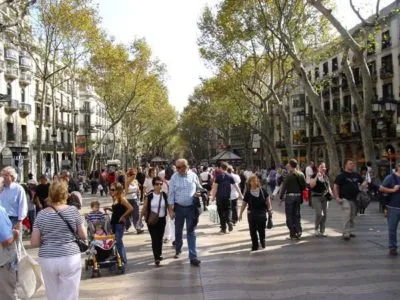
Las Ramblas is Barcelona’s most emblematic promenade. It starts at Plaça Catalunya and ends at the port, where the statue of Christopher Columbus stands. Las Ramblas consists of several stretches, hence the plural. Highlights include the Rambla de Canaletes, for the famous fountain where FC Barcelona’s titles are celebrated, and the Rambla de las Flores. In addition to flower stalls, there are kiosks, souvenir shops, a craft market and numerous bars and terraces. A multitude of artists gather here: living statues, musicians, dancers and cartoonists of all kinds. If you want a portrait done on the spot, this is the place! Walking along it you can see several interesting buildings such as the famous La Boquería Market and the Liceu Theatre. Its tile design stands out, which imitates the waves of the sea, in addition to the magnificent artwork of the artist Joan Miró on the pavement, halfway along the promenade, which symbolises the entry by sea to Barcelona.
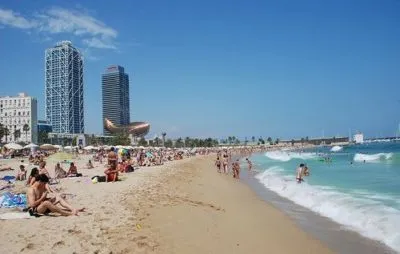
Barceloneta Beach is the most famous (and the oldest) beach in Barcelona. It lies in the Barceloneta district (hence its name), and together with the neighbouring beaches (Sant Sebastià and Victoria) it is one of the longest. Due to its good transport links (near the Barceloneta and Ciutadella metro stops), it is one of the tourists’ favourites. It has many facilities for sports activities, from beach volley to paddle-surf, and even a nudist area. Barcelona’s beaches are ideal for taking a dip, sunbathing, strolling along the shore or enjoying a good paella with sea views — and all this just 10 minutes from downtown Barcelona.
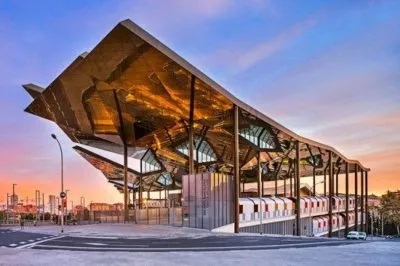
With more than 7 centuries of existence, it is one of the oldest markets still operating in Europe. Barcelona’s commercial dynamism is reflected in “Els Encants”. Throughout its history it has been located in different places, with a somewhat temporary feel, until in 2013 it opened its doors in its current and definitive location between the Meridiana and Plaça de les Glòries. The market features a spectacular 24-metre canopy, full of mirrors that reflect all its activity, being also a design architecture gem. Thanks to this, the market retains its essence and brings back the feeling of buying outdoors, while being sheltered from the rain. The best of the market are its stalls and the auction square (where from 7 to 9 in the morning auctions are held of flats, shops or stocks). “Els Encants” receives around 150,000 visitors each week. It is undoubtedly the best place to buy uncommon, old or new items, at the best price.
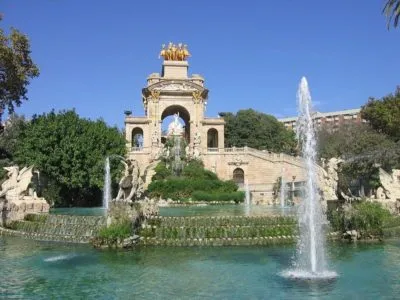
For many years it was Barcelona’s only park. It was built by Felipe V on the old city fortress lands. Today the park is one of the city’s largest green parks, declared a “Bien de Interés Cultural and Historical Heritage of Spain”. Inside its grounds are the Barcelona Zoo, a surprising waterfall made up of a huge monumental ensemble and the building of the Castle of the Three Dragons (the Zoology Museum). The park stands out for its large landscaped extension, with wide tree-lined avenues and zones for strolling, as well as the lake and the waterfall. The lake has several islets and a wide variety of exotic plants and marine animals and you can rent boats. Beside the waterfall is the Romantic Garden, with a wide variety of plants. And in the old parade ground there is an oval pond with the famous sculpture “Desconsuelo” by Josep Llimona.
See more
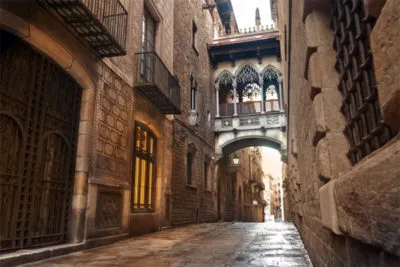
The Gothic Quarter belongs to the “Ciutat Vella” district and is the oldest part of Barcelona, as well as its historic centre. This area concentrates most of the city’s Gothic buildings, such as Santa Maria del Mar or Santa Maria del Pi. Other remarkable Gothic sites include the Cathedral of the Holy Cross, the Basilica of La Mercè, Plaça Sant Jaume, Plaça Reial, and Portal de l’Àngel. Because of its charm and historical importance, many cultural tours are organised to discover the secrets of Barcelona’s Gothic art, which underwent major transformations from the 19th century onwards — for example, turning cemeteries into public squares or demolishing the old wall. Today, parts of the first city wall are still preserved in Plaça de la Seu, in front of the Barcelona Cathedral.
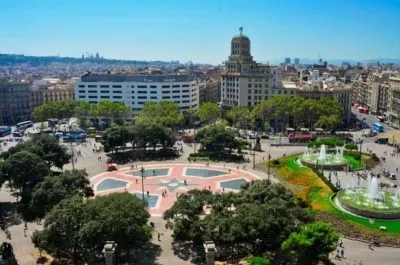
Plaça Catalunya is the most famous and central square of the city. With its five hectares, it is one of the largest squares in Spain. It features various sculptures such as La Diosa, Barcelona, El Pastor, and the most iconic — The monument to Francesc Macià by Subirachs — consisting of a pedestal representing the history of Catalonia and an unfinished inverted staircase symbolising the country’s future, step by step. Due to its location, the square connects the Eixample with the old town. The city’s main avenues start here: Las Ramblas, Passeig de Gràcia, Ronda de Sant Pere, Pelai Street… The surrounding area is full of economic and commercial activity — hotels, restaurants, shops, and shopping centres fill the square with life throughout the day.
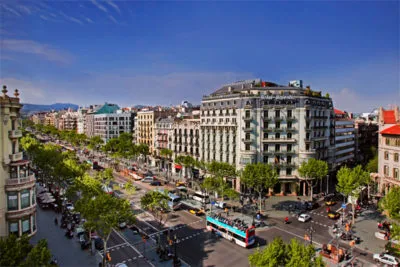
Passeig de Gràcia is one of Barcelona’s widest and most prestigious avenues. It connects Diagonal with Plaça Catalunya and is lined with magnificent buildings. During the economic boom, the Catalan bourgeoisie competed to have the most beautiful home, commissioning their projects to the three fashionable architects: Gaudí, Puig i Cadafalch and Domènech i Montaner. There’s even a block that contains a masterpiece from each — the “Block of Discord”. Among all the architectural gems, Casa Batlló and La Pedrera stand out. Besides its architectural value, Passeig de Gràcia is one of Spain’s most exclusive luxury shopping areas, with a multitude of designer boutiques and high-end hotels.
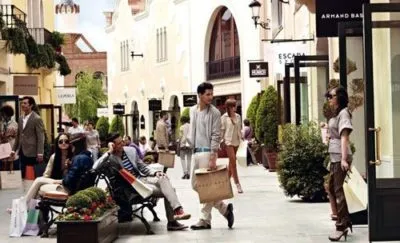
La Roca Village is an outlet shopping complex located just outside Barcelona, where buying luxury clothing is much more affordable. Brands such as Ralph Lauren, Armani, Custo and Escada have outlet stores here. The open-air centre resembles a charming village, ideal for shopping or relaxing in one of its many restaurants. It’s open daily from 10 a.m. to 9 p.m., offers free Wi-Fi, ATMs, and a large free outdoor car park. Even pets are welcome — there’s a free space where they can run and play safely.
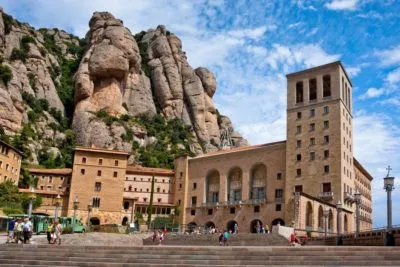
Montserrat is a rocky mountain range considered Catalonia’s most important mountain. Located about 50 km from Barcelona, it is known for its unique shape and its monastery — a pilgrimage site for believers and a must-see for visitors. The site includes the Monastery of Santa Maria de Montserrat, the Basilica and the Museum. This Benedictine monastery was founded in the 11th century and stands 720 metres above sea level. It houses the Virgin of Montserrat, known as La Moreneta, the patron saint of Catalonia, famous for the black colour of her face and her miracles. The sanctuary’s grounds feature remarkable architectural and sculptural works by renowned artists. The museum displays works by Dalí, El Greco, Miró, Picasso and Tàpies. Montserrat is also famous for its boys’ choir, one of the oldest in Europe.
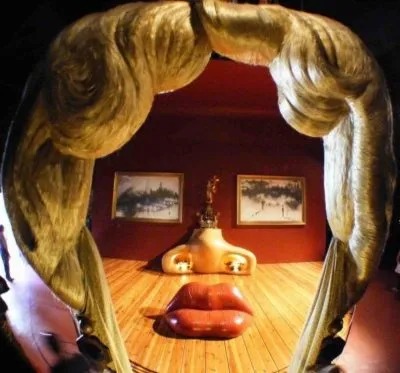
The Dalí Theatre-Museum, located in the Gala-Salvador Dalí Square in Figueres, is entirely dedicated to the painter Salvador Dalí. Managed by his foundation, it houses most of his works alongside the Reina Sofía Museum in Madrid. Dalí personally designed the project, including the reconstruction of the neoclassical building. Inside are his last bedroom and a crypt containing his tomb. He was buried here against his wishes — he had wanted to be laid to rest beside his wife Gala at Púbol Castle. Each room is a work of art in itself, filled with paintings, sculptures, furniture, decorations, and curiosities. Many of the walls and ceilings are covered with enormous murals based on his paintings.
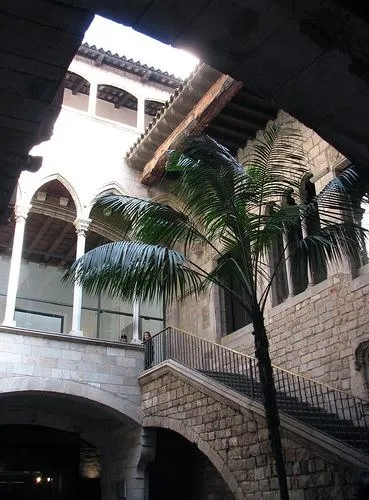
Located in El Born, the Picasso Museum of Barcelona holds national interest and features 4,249 works, making it the most complete collection in the world of Picasso’s early years. The collection focuses on his formative period up to the Blue Period, but also includes works from 1917 and the famous Las Meninas series (1957), as well as numerous engravings. The museum occupies five grand medieval palaces on Montcada Street, dating from the 13th and 14th centuries — an exceptional example of Catalan Gothic civil architecture.
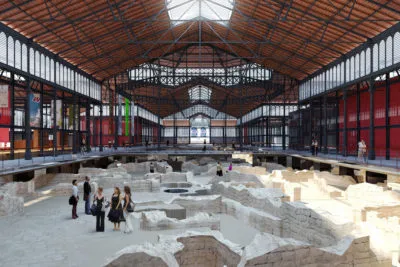
El Born is Barcelona’s trendiest and most artistic district. It is full of narrow streets with striking contrasts between the medieval and the modern. Situated between Via Laietana and Barceloneta, next to Parc de la Ciutadella, the area was once used for jousts and public executions. It later flourished thanks to medieval trade routes. Don’t miss Santa Maria del Mar Church, the Picasso Museum, and the Textile Museum. During renovations of the Born Market, medieval ruins were uncovered and preserved. By day, you can wander through streets filled with artisan and designer shops, or stop at one of its many cafés. By night, Passeig del Born comes alive with tapas bars and nightspots open until the early hours.
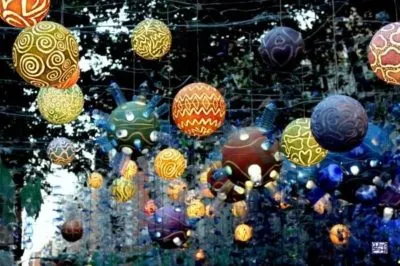
Just one metro stop from Passeig de Gràcia, the Gràcia district has a unique personality — a mix of traditional and bohemian vibes. Full of artists and locals of lifelong residence, it retains rich ethnic diversity. Famous Catalan rumba musician El Pescaílla (Lola Flores’s husband) was born here, giving the area a joyful, communal spirit. Beyond Parc Güell, Gràcia is known for its famous mid-August street festival. Neighbours work for months to decorate the streets — the most beautiful wins a prize. The decorations, often made from recycled materials, are spectacular. Alongside the displays, concerts and cultural activities fill the festive nights.
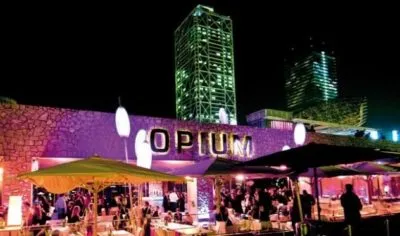
The Port Olímpic nightlife area is ideal for a drink or a night of dancing. Located beside Barceloneta Beach, beneath Barcelona’s twin towers, it offers endless entertainment options. Most pubs close around 3 a.m., but the nightclubs stay open until 6 a.m., ensuring the party never stops. The city’s most glamorous venues are here — Shôko (Asian Lounge Restaurant Club), Catwalk (a stylish club with top house music), and Opium, one of Spain’s most famous luxury nightclubs.
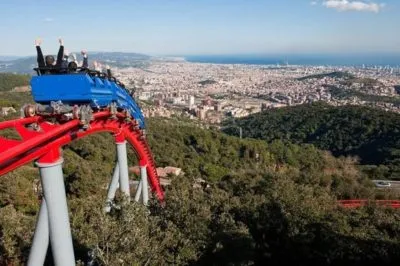
Tibidabo Amusement Park is a magical, emblematic spot on Mount Tibidabo. It is one of the world’s oldest amusement parks (the oldest in Spain and the third in Europe). Standing 500 metres above the city, it offers breathtaking views of Barcelona. Access to its viewpoints and forest paths is free. Woody Allen chose it to film scenes for his Oscar-winning Vicky Cristina Barcelona. Covering 70,000 m², the park has six levels — levels 1 to 5 host most rides, while level 6 is a free access garden area. With more than 25 rides suitable for all ages, shows, and roaming performances, it’s the perfect family day out.
Discover Barcelona day and night aboard the Barcelona Bus Turístic. You can hop on and off as many times as you wish for 24 hours. Create your own itinerary, explore the city at your own pace with the audio guide, and enjoy unique panoramic views of its main monuments. The nearest stop is just 200 m from our establishment.
Blue Route: From Plaça Catalunya to the FC Barcelona stadium, passing by Passeig de Gràcia, Sagrada Familia, Gràcia, Park Güell, Tibidabo and Pedralbes.
Red Route: From Plaça Catalunya to Ciutadella Park, passing through Passeig de Gràcia, Diagonal, Sants Station, Montjuïc and Port Vell.
Green Route: From Port Olímpic to the Fòrum, passing through Poblenou and offering the best views of the city’s beaches.
Tickets can be purchased at reception with a small discount.
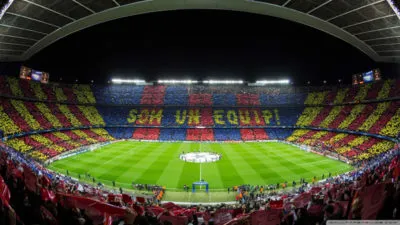
Camp Nou is the stadium of FC Barcelona, one of the city’s two major football clubs. Located in the Les Corts district near Diagonal Avenue, it opened in 1957 and remains Europe’s largest stadium — the fifth largest in the world — with nearly 100,000 seats. In 1998 it was designated a UEFA Elite Stadium, the second in Spain to receive this honour. Besides hosting the world’s best players, the sports complex also includes an ice rink, shops, cafés, and the Barça Museum, which exhibits all the club’s trophies and archives its entire history.
Would you like more tips for your trip to Barcelona?
Don't miss our blog, created so you can enjoy the city like a true local.
Luces de Navidad en Barcelona 2025: Guía definitiva para vivir la ciudad más brillante
La Navidad llega a Barcelona y, con ella, ese momento en el que las calles se iluminan, las plazas se…
We are building a hotel in the heart of the city next to the Sagrada Familia.
Hostemplo currently offers three types of accommodation:
Hotel ***, Hotel ** and Apart-Suites, spread across six buildings, all very close to the Sagrada Familia temple.